Documenting scratches and existing damage before driving off is well-known, standard advice, and worth doing every single time regardless of how routine it starts to feel after a few trips. What’s less commonly discussed, but arguably just as important, is a completely different two-minute check: confirming the car actually works the way you expect and that you know how to operate it, before you’re merging onto an unfamiliar motorway trying to find the wipers for the first time.
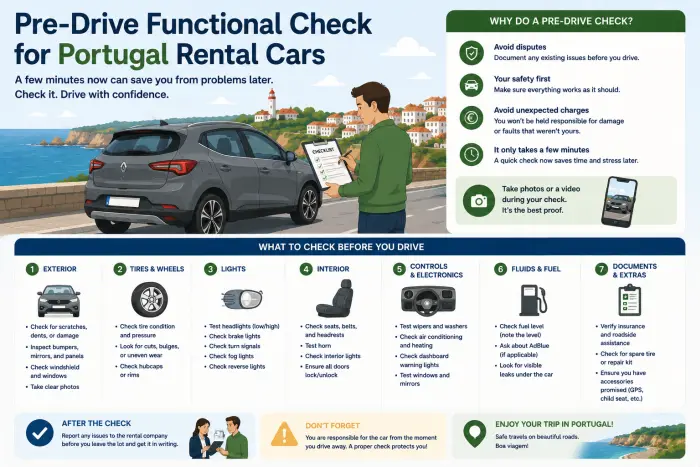
Quick verdict: before leaving the rental lot, adjust your seat and mirrors, test the horn, confirm every light works, and physically locate and test the turn signals, wipers, and climate controls by feel. This takes about two minutes standing still and prevents a considerably more stressful few minutes trying to figure it out while actually driving in unfamiliar traffic.
Why This Is a Genuinely Different Check From Damage Documentation
Photographing scratches and dents protects you from being blamed for pre-existing damage at return, a well-established habit worth continuing to prioritize. This functional check serves an entirely different purpose: confirming the vehicle is safe and comfortable to actually drive, and that you personally know where and how to operate its specific controls, since every vehicle model places switches and buttons in slightly different locations. These are complementary habits worth doing together, not substitutes for each other.
The Core Functional Checklist
| Check | Why It Matters |
|---|---|
| Seat and mirror adjustment | Ensures you can actually see properly before you’re already driving |
| Horn test | A functioning horn matters for genuine safety situations |
| All lights (headlights, indicators, brake lights) | Confirms visibility and legal compliance before you’re on the road |
| Wipers and windshield washer | Sudden rain shouldn’t be the first time you’re locating this control |
| Climate controls (aircon, heat, defroster) | Comfort and visibility (defroster) both depend on knowing this quickly |
| Turn signals located by feel | You shouldn’t need to look down to find these while actually driving |
Adjusting the Seat and Mirrors First
This sounds obvious but is worth doing deliberately rather than assuming the previous renter’s settings are close enough to work for you. Take the time to genuinely adjust the seat position and both mirrors for your own height and driving position before you start moving, since proper visibility matters more in Portugal’s mix of narrow historic streets and fast-moving motorways than it might in more familiar driving conditions back home.
Learning the Controls by Feel, Not by Looking
The specific recommendation worth taking seriously is locating and testing every control, turn signals, wipers, lights, climate system, by touch rather than needing to visually search for them once you’re actually driving. Reaching for a signal or wiper control while genuinely needing it, on an unfamiliar mountain road or in Lisbon’s roundabout-heavy traffic covered in our guide on Portuguese roundabout rules for tourists, is a considerably worse moment to be searching for a switch than the parking lot before you’ve even left.
Testing the Radio, Then Turning It Down
A small but practical tip worth including: briefly testing the audio system, tuning to a station or connecting your phone, then turning the volume down low before you actually start driving, avoids a startling blast of unfamiliar music or talk radio the first time you turn the key while already in motion. This is a minor comfort detail, but minor distractions matter more than usual when you’re simultaneously adjusting to an unfamiliar vehicle and unfamiliar roads.
Confirming Fuel Type and Cap Location
Beyond the purely functional controls, it’s worth confirming which side the fuel cap is on and exactly what fuel type the vehicle takes before you’re at a station guessing. Our guide on what to do if you put the wrong fuel in a rental car covers the genuinely costly consequences of getting this wrong, worth avoiding entirely by confirming it calmly in the parking lot rather than discovering the answer under pressure at a busy fuel station later in your trip.
Checking Parking Sensors and Cameras If Equipped
If your specific vehicle includes parking sensors or a reversing camera, it’s worth confirming these actually work and understanding how the display or audio feedback behaves before you genuinely need them, particularly given how tight parking spaces can be in Portugal’s older city centers. This is a smaller detail than the core checklist above, but a malfunctioning or unfamiliar parking aid discovered only while attempting a genuinely tight reverse maneuver adds unnecessary stress to what should be a routine task.
💸 Don’t Overpay at the Airport
Compare real-time rental deals with no hidden fees or credit card needed.
Checking Whether a Spare Tire Is Actually Included
While you’re doing this functional check, it’s worth popping the trunk to see what tire equipment your specific vehicle actually includes, connecting to our guide on rental cars without a spare tire, since an increasing share of modern vehicles come with only a repair kit rather than a genuine spare. Knowing this before you need it, rather than discovering it during an actual flat tire, lets you plan your driving and route choices with a more accurate understanding of your actual backup options.
Does This Matter More for an Automatic-Restricted Driver?
Somewhat, worth connecting to a related consideration. If you hold a license with the automatic-only restriction covered in our other guide, confirming the vehicle is genuinely automatic, not just assumed to be based on your booking, is worth adding to this functional check specifically, since this particular confirmation carries genuine legal weight beyond simple comfort or convenience.
Why This Matters Even More for an Evening Arrival
If your first drive happens to be at night, whether landing on a late flight or picking up the car in the evening, this functional check becomes considerably more important than it would for a daytime pickup. Our guide on night driving in Portugal covers the broader precautions worth taking for evening drives specifically, worth reading alongside this checklist since confirming your headlights, high beams, and interior lighting all work correctly matters more when you’re about to rely on them immediately rather than having daylight as a natural backup during your first few minutes behind the wheel.
📋 Functional Check Checklist Before Driving Off
- Adjust your seat and both mirrors for your own height and position before starting the engine
- Test the horn and confirm all lights, indicators, and brake lights work
- Locate and test wipers, washer fluid, and climate controls by feel, not by looking
- Briefly test the radio or audio connection, then turn the volume down low
- Confirm fuel cap location and fuel type before you actually need to refuel
- Test parking sensors or reversing camera if equipped, and check what tire equipment is actually in the trunk
❓ Frequently Asked Questions
Is a functional check different from documenting damage at pickup? Yes, genuinely different purposes. Damage documentation protects you from disputed charges, while a functional check confirms the vehicle is safe and comfortable to actually drive.
Why does it matter to locate controls by feel rather than by looking? Because searching visually for a control while actually driving is a genuine distraction and safety risk, particularly in unfamiliar traffic conditions like Portuguese roundabouts.
Should I test the radio before driving off? Worth doing briefly, then turning the volume down, so an unexpected blast of sound doesn’t startle you the first time you turn the key while already in motion.
Does this check matter more if I have license restrictions like automatic-only? Yes, worth adding a specific confirmation that the vehicle matches your license’s actual requirements, which carries real legal weight beyond general comfort or convenience.
Should I check the trunk for a spare tire during this same functional check? Yes, worth doing at the same time, since knowing your actual tire backup options in advance helps you plan your driving with a more accurate understanding of what you’d be relying on in a genuine flat tire situation.
Does this checklist matter more if my first drive happens at night? Yes, considerably. Confirming headlights and interior lighting work correctly matters more when you’re about to rely on them immediately, without daylight as a natural backup during your first minutes in the vehicle.
For the broader documentation habit that protects against damage disputes, see avoiding a rental car damage dispute in Lisbon. For general road navigation once you’re comfortable with the vehicle itself, our driving rules in Portugal guide covers the broader picture.