Driving in Portugal isn’t hard, exactly — but it has its own logic, and a fair number of visitors learn that logic the expensive way, through a fine, a toll bill that shows up weeks later, or a scrape against a cobblestone curb they didn’t see coming. This page is meant to save you that lesson. It’s the starting point for everything about actually operating a rental car here, organized by the kind of question you’re likely to have rather than buried in one exhaustive list.
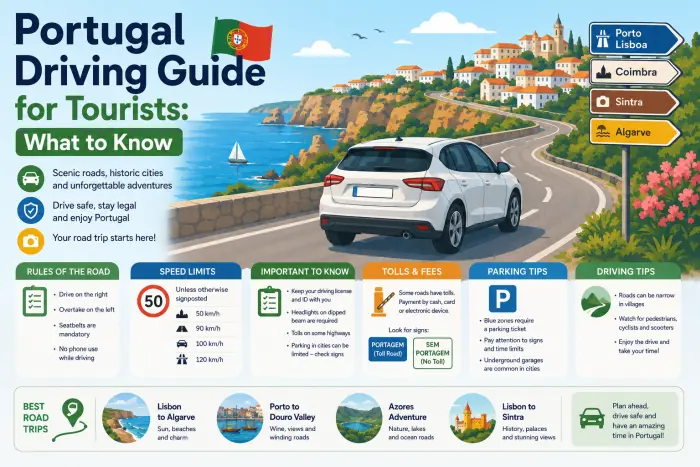
The rules that catch visitors off guard
Portugal drives on the right, roundabouts give priority to traffic already in the circle, and speed limits are enforced more consistently by camera than most visitors expect — average-speed cameras on some motorway stretches catch people who’d never dream of getting a ticket back home. A few specifics trip people up regularly: our guides to roundabout rules for tourists and the road signs glossary cover the visual language of Portuguese roads, while speed limits and how speeding fines actually get issued and paid cover what happens if you don’t quite catch a posted limit in time. If your license isn’t from the EU, whether you need an international driving permit is worth settling before you fly rather than at the rental counter, and Portugal’s move toward digital driving licenses is changing what counterstaff expect to see. If your trip crosses into Spain, driving from Lisbon over the border and the broader question of taking a Portuguese rental across any border both come with rental-agreement fine print worth checking first.
City driving, zones, and where not to take a rental car
Lisbon and Porto both restrict certain historic streets, though not in the way most visitors assume — our guide to Lisbon’s low emission zone explains the genuine emissions-based restriction there, while Porto’s zone works completely differently and doesn’t filter by emissions at all. Beyond the formal zones, Lisbon’s historic center and its cobblestone streets are worth avoiding by car regardless of what any zone technically permits — narrow, steep, and genuinely rough on a rental’s suspension and paintwork. If your route takes you over the Vasco da Gama bridge, that’s its own small logistics question, and for parking once you’re in a city center, our Lisbon parking guide and rundown of parking apps like EMEL, Telpark, and EasyPark cover what to expect — along with what happens if you get it wrong, in our guide to parking fines.
Tolls, and why the bill arrives later than you’d expect
Portugal’s motorways run on an electronic-only toll system with no cash booths on most stretches, which means your rental car’s built-in transponder handles the charge automatically — and the bill often lands on your card after you’ve already flown home. Our Via Verde transponder explainer and billing timeline cover exactly how that works, and our broader guide to toll roads in Portugal is worth reading before a longer road trip so the eventual charge isn’t a surprise.
💸 Don’t Overpay at the Airport
Compare real-time rental deals with no hidden fees or credit card needed.
What to do when something goes wrong on the road
Breakdowns and accidents happen, and knowing the sequence before you need it makes a genuine difference. Save Portugal’s emergency numbers before you drive, and know the difference between a situation that needs a full accident report and a simple breakdown — our Lisbon-specific breakdown guide covers the local specifics. Portuguese law requires a reflective vest and warning triangle in the cabin, covered in our mandatory safety kit guide, and it’s worth doing a quick functional check of the car before you drive off rather than discovering an issue on the motorway. If you’ve lost your keys, our dedicated guide covers the realistic options, and if theft or a break-in is a concern, prevention tips are worth a read before you park somewhere unfamiliar overnight. Solo travelers, particularly women driving alone, may find our safety-focused guide useful, and night drivers should check our tips for driving after dark. A handful of routes deserve extra caution regardless of experience — see our notes on Portugal’s more dangerous roads and, if you’re traveling in summer, wildfire season driving safety.
Choosing and running the actual vehicle
The car itself brings its own set of small decisions. Manual vs. automatic and renting with an automatic-only license cover a question that surprises a lot of first-time visitors to Europe, since automatics remain the exception rather than the rule here. Fuel choice matters too — diesel vs. petrol, what to do if you’ve put in the wrong fuel type, and general fuel cost expectations and filling up before return are all worth understanding ahead of time. If you’re considering an electric rental, our guide to Portugal’s charging network covers what road-tripping on battery power actually looks like here. And if a specific vehicle type matters for your route, our picks for the best rental cars for driving in Lisbon by vehicle type is a good starting point.
Staying connected and finding your way
GPS coverage in Portugal is generally solid, but our navigation tips cover the gaps worth knowing about, and eSIM options for mobile data are worth setting up before you land if you’re relying on your phone rather than the car’s built-in system. Some travelers also ask about dash cams — not required, but worth knowing what they actually add.
Longer road trips and specific routes
A handful of routes and situations come up often enough to deserve their own coverage: the drive to Fátima for pilgrims and visitors alike, what to expect from motorway rest stops on a longer trip, and overnight parking for campervans if that’s part of your plan. ## Whichever question brought you here
Driving in Portugal rewards a small amount of preparation far more than it punishes a lack of it — most of what trips visitors up is knowable in advance, not the kind of thing you’d only learn by getting it wrong first. Whatever you’re driving and wherever you’re headed, the guides above are organized to answer the specific question you actually have — start with whichever section matches what’s on your mind right now, and come back to the rest once it’s actually relevant to your trip.