Popping the trunk expecting to find a spare tire and instead finding a small plastic case with a bottle of sealant is an increasingly common experience across the entire car industry, rental fleets included. This isn’t a Portugal-specific issue, it reflects a broader shift in how modern vehicles are equipped, but it’s genuinely worth understanding before you’re relying on whatever’s actually back there during a real flat tire on an unfamiliar road far from any obvious help.
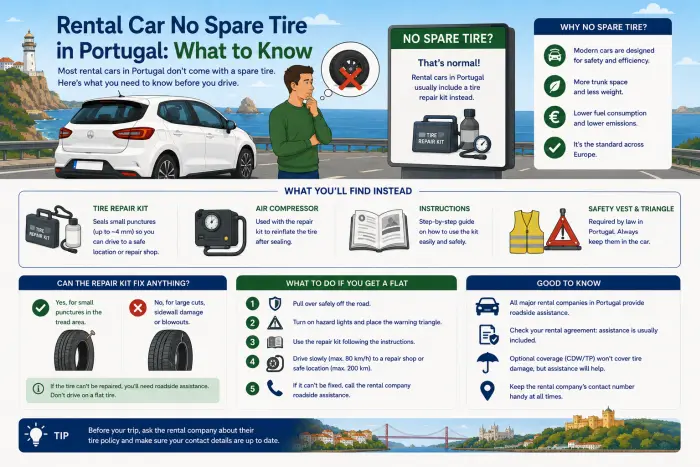
The one rule: don’t assume your rental car has a full spare tire; check what’s actually in the trunk at pickup, and understand that a repair kit only handles small punctures, not the more serious tire failures that a genuine spare would have covered. If tire equipment genuinely matters to your specific itinerary, particularly remote or rural driving, ask directly at the counter rather than assuming.
Why This Has Become So Common
This shift reflects genuine industry-wide trends toward lighter vehicles for fuel efficiency and emissions compliance, along with the simple reality that removing a spare tire, jack, and associated tools frees up meaningful trunk space and reduces manufacturing cost for the automaker. Recent testing found that a substantial share of new vehicles, roughly 45% in one comprehensive dataset, no longer include any spare tire at all, split between sealant/inflator kits, run-flat tires, and in a small share of cases, nothing provided whatsoever beyond a genuinely empty compartment. This trend is considerably more pronounced in electric and hybrid vehicles specifically, worth keeping in mind if you’re considering one for your Portugal trip.
The Three Things You Might Actually Find
| Equipment | What It Actually Does |
|---|---|
| Full-size or space-saver spare | A genuine backup wheel, though a space-saver has speed and distance limits |
| Tire repair/inflator kit | Sealant and compressor; fixes small tread punctures only, not sidewall damage or blowouts |
| Run-flat tires | Reinforced sidewalls allow limited continued driving after a puncture, no spare needed |
| Nothing at all | Some vehicles include no backup solution beyond roadside assistance |
Why a Repair Kit Isn’t the Same as a Spare
This distinction matters more than it might seem in the moment you actually need it. A repair kit’s sealant-and-inflate approach works reasonably well for a small nail or screw puncture in the tread area, the most common type of flat, but it genuinely can’t help with sidewall damage, a large gash, or a full blowout, situations where a real spare would have gotten you moving again. Understanding this limitation before you’re stranded, rather than discovering it in the moment, helps set realistic expectations about what your specific vehicle’s equipment can and can’t handle.
What to Check at Pickup
Before driving off, it’s worth taking thirty seconds to actually check the trunk and understand what your specific vehicle includes, rather than assuming based on habit from a previous rental or your own car at home. If you find a repair kit rather than a spare, note this and factor it into how you think about more remote driving specifically, since the practical implications differ meaningfully from having a genuine backup wheel available.
Does This Matter More for Certain Trips?
Yes, considerably. A trip confined to well-maintained motorways and city driving carries relatively low exposure to a genuinely severe tire failure scenario, and a repair kit’s limitations rarely become relevant. A trip into more remote areas, rural roads with less traffic and slower response times, is where the gap between a repair kit and a genuine spare matters more, similar to the broader remote-area precautions covered in our guide on what happens if a rental car breaks down in Portugal, worth reading alongside this specific tire equipment question.
If You Get a Flat Without a Real Spare
The correct first step is the same regardless of what equipment you have: pull over safely, activate hazard lights, and assess whether the damage is a small tread puncture a repair kit could plausibly handle or something more serious. For a genuinely severe flat, sidewall damage or a blowout, calling your rental company’s roadside assistance line is the correct move rather than attempting to use a repair kit that isn’t designed for that kind of damage, since forcing a repair kit onto unsuitable damage can waste time without actually solving the problem.
Does This Affect Your Choice of Vehicle Category?
Somewhat, worth factoring in if remote driving is genuinely part of your itinerary. Larger vehicles and SUVs have historically been more likely to include a genuine spare given their larger cargo space, though this isn’t a universal rule and varies by specific model. Our guide on SUV car rental at Lisbon Airport covers this vehicle category in more depth; if tire equipment is a genuine priority for your specific trip, asking your supplier directly what a specific vehicle includes, rather than assuming based on general category, is worth doing before booking.
💸 Don’t Overpay at the Airport
Compare real-time rental deals with no hidden fees or credit card needed.
Does This Matter More on Madeira’s Roads?
Worth a specific mention given how differently this could play out there: our guide on driving in Madeira’s mountain roads covers a terrain where many rural sections lack hard shoulders, meaning a tire failure without adequate equipment on a narrow mountain road carries somewhat higher stakes than the same situation on a mainland motorway. If your Portugal trip includes Madeira specifically, checking your vehicle’s tire equipment at pickup is worth doing with a bit more attention given the terrain you’ll actually be driving.
Documenting Tire Damage for Any Dispute
If a tire failure occurs and there’s any question about whether it resulted from road conditions versus pre-existing wear, having documentation matters the same way it would for any other damage scenario. Our guide on avoiding a rental car damage dispute in Lisbon covers the broader documentation habit worth building into every rental, directly relevant here if a tire-related charge appears at return that you believe reflects pre-existing condition rather than something you caused.
Does Time of Day Change the Risk?
Somewhat, worth connecting to broader driving-condition awareness. A tire failure at night on an unfamiliar road carries genuinely higher stakes than the same failure during daylight, given the reduced visibility for both assessing the damage safely and being seen by other traffic while pulled over. Our guide on night driving in Portugal covers the broader precautions worth taking for evening drives, worth reading alongside this tire equipment question since the two considerations compound on any route combining remote roads with reduced-light conditions.
📋 Spare Tire Checklist for a Portugal Rental Car
- Check the trunk at pickup to see what tire equipment is actually included
- Understand that a repair kit handles small punctures only, not sidewall damage or blowouts
- Factor this into your planning specifically for remote or rural driving, where the gap matters more
- Know that calling roadside assistance, not forcing a repair kit, is the right move for a genuinely severe flat
- Ask directly at booking if a genuine spare matters to your specific itinerary
❓ Frequently Asked Questions
Do all rental cars in Portugal have a spare tire? Not necessarily. A growing share of vehicles industry-wide come with a repair kit or run-flat tires instead of a genuine spare, a trend not specific to Portugal but present in rental fleets everywhere.
Can a tire repair kit fix any kind of flat? No. It works for small tread-area punctures only, not for sidewall damage, large gashes, or blowouts, which require roadside assistance regardless of the kit.
Should I ask about spare tire equipment before booking a rental car? Worth doing if your itinerary includes remote or rural driving specifically, since this is where the gap between a repair kit and a genuine spare matters most.
What should I do if I get a severe flat tire without a real spare? Pull over safely and call your rental company’s roadside assistance line rather than attempting to use a repair kit that isn’t designed for serious tire damage.
Should I document tire damage the same way I would other rental car damage? Yes, particularly if there’s any question about whether the damage resulted from road conditions or pre-existing wear, since clear documentation supports your case if a dispute arises at return.
Does driving at night increase the risk of a tire failure becoming a bigger problem? Yes, somewhat. Reduced visibility for both assessing damage safely and being seen by other traffic adds real risk on top of the tire issue itself, worth factoring into any night driving through remote areas.
For general supplier options and vehicle category comparisons, our best car rental companies at Lisbon Airport roundup is a useful starting point.