Daytime driving skills don’t automatically transfer to night driving in an unfamiliar country, and Portugal’s mix of well-lit motorways and genuinely unlit rural roads means the actual risk level varies considerably more by route than most first-time visitors expect going in. Understanding what specifically changes after dark, rather than treating night driving as simply “the same roads, less visibility,” helps you plan realistically rather than underestimating a genuinely different driving environment altogether.
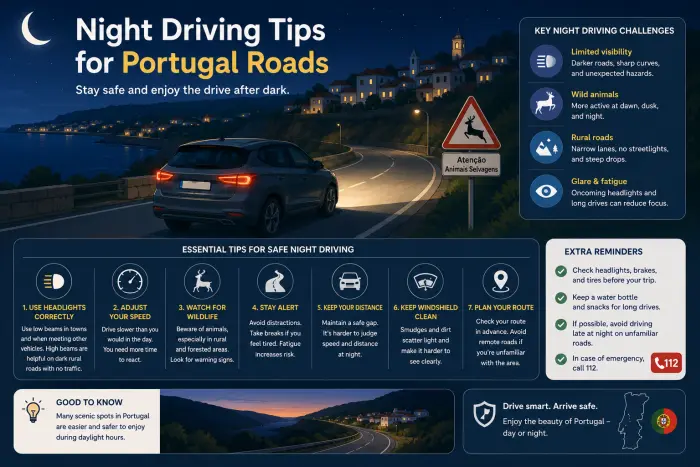
Motorways and major city routes remain reasonably comfortable to drive at night, generally well-lit and clearly marked. Rural and coastal roads change considerably more, often unlit entirely, with reduced signage visibility and a real chance of wildlife crossing unexpectedly. If your itinerary allows flexibility, planning rural driving for daylight hours specifically is worth the schedule adjustment.
Why Rural Roads Are the Real Concern, Not Motorways
This is the distinction worth understanding clearly before dismissing night driving concerns entirely or overestimating them uniformly across every road type. Portugal’s motorway network is generally well-lit and clearly marked regardless of time of day, making it a genuinely comfortable night-driving environment comparable to major routes in most other European countries. Rural roads, particularly in less populated interior regions or along quieter coastal stretches, frequently have no street lighting at all, relying entirely on your vehicle’s headlights and genuinely limiting visibility of the road’s edges, sharp curves, and anything unexpected ahead.
What Actually Changes at Night
| Factor | Daytime | Night |
|---|---|---|
| Motorway visibility | Full visibility, clear markings | Generally well-lit, comparable comfort level |
| Rural road visibility | Full visibility of curves, edges, hazards | Often unlit, headlight-dependent, reduced hazard awareness |
| Wildlife crossing risk | Lower, animals typically less active | Higher, particularly dawn and dusk transition periods |
| Signage visibility | Clear at any distance | Reduced, especially for older or less-reflective signage |
| Fatigue factor | Lower for most drivers | Compounds with jet lag or a long travel day |
Wildlife on the Road: A Genuine Consideration
Rural and forested stretches of Portugal do have wildlife that becomes more active around dawn and dusk specifically, and a collision with a larger animal at speed is a genuine hazard worth taking seriously rather than dismissing as unlikely. Reducing speed on unlit rural roads during these transition periods, staying especially alert on stretches bordered by forest or open countryside, and being prepared to brake rather than swerve sharply if something does appear are worth building into your driving approach for any evening or early-morning rural drive.
Fatigue Compounds Everything Else
Night driving fatigue deserves specific attention for travelers, since jet lag, a long day of sightseeing, or simply the accumulated tiredness of a multi-day road trip compounds with the already-reduced visibility and alertness demands of driving after dark. This combination is worth taking seriously rather than pushing through a long evening drive purely because your itinerary planned it that way. If you’re genuinely tired, stopping for a break, or in some cases simply waiting until morning rather than continuing, is a reasonable and safer choice than powering through fatigue on an unfamiliar unlit road.
Signage and Navigation After Dark
Road signage that’s perfectly clear in daylight can become considerably harder to read at night, particularly older or less-reflective signage on smaller rural roads compared with well-maintained motorway signage. This is one more reason reliable GPS navigation matters even more specifically for night driving, since visual signage alone becomes a less reliable backup than it would be during the day. See our guide on mobile data and eSIM for a Portugal road trip for ensuring your navigation stays reliable throughout an evening drive specifically, when losing connectivity is a bigger problem than it would be with full daylight visual navigation as a backup.
Should You Simply Avoid Night Driving Where Possible?
For a genuinely flexible itinerary, yes, defaulting to daylight hours for any driving through unfamiliar rural or coastal routes is the simplest way to sidestep most of the specific concerns covered in this article entirely. This isn’t always practical, a late flight arrival or an evening return from a day trip sometimes makes some night driving unavoidable, but for the portions of your trip where you do have scheduling flexibility, favoring daylight specifically for the least familiar or most rural stretches of your route is a reasonable, low-effort precaution worth building into your planning from the start.
Arriving Late and Driving Straight to Your Accommodation
A common scenario worth planning for specifically: landing on a late flight and needing to drive directly from Lisbon Airport to accommodation in an unfamiliar area, sometimes in a more rural or coastal location outside the city itself. Confirming your accommodation’s exact address and access instructions in advance, ensuring your navigation is fully set up before you even collect the rental car, and building extra buffer time into this specific drive rather than rushing removes some of the pressure that compounds an already less-than-ideal first-night driving scenario.
Does Charging an EV at Night Add Its Own Complication?
If you’re driving an electric rental car specifically, night driving adds one more consideration worth being aware of: some public chargers may have reduced staffing or support availability overnight compared with daytime, and locating a charger in an unfamiliar area after dark carries the same reduced-visibility challenges as finding any other unfamiliar location at night. Planning charging stops for daylight hours where your itinerary allows, similar to the broader night-driving caution this article covers, is worth factoring in specifically for an EV road trip.
💸 Don’t Overpay at the Airport
Compare real-time rental deals with no hidden fees or credit card needed.
Headlights, High Beams, and Oncoming Traffic
Using high beams on unlit rural roads genuinely improves your own visibility, but remembering to switch back to low beams promptly when an oncoming vehicle approaches is both a courtesy and, in some cases, a legal requirement, since failing to dim high beams can temporarily blind an oncoming driver in a genuinely hazardous way. This is worth being consciously aware of specifically on Portugal’s rural roads, where high beam use is more common and more necessary than on well-lit motorways, making the habit of dimming promptly more actively important than it would be in a fully urban driving context.
Parking After Dark: An Extra Consideration
Finding and assessing a parking spot at night carries its own reduced-visibility challenge separate from the driving itself, particularly for street parking where lighting quality varies noticeably by specific location and neighborhood. Favoring well-lit, populated parking areas over a poorly lit or isolated spot becomes more important specifically after dark, similar in principle to the general precautions worth taking regardless of time of day, but worth weighing with extra care when visibility itself is already reduced and assessing an unfamiliar area’s safety becomes genuinely harder in the dark than it would be in daylight.
Night Driving Checklist for Portugal
- Favor daylight hours for rural or unfamiliar routes wherever your itinerary allows flexibility
- Reduce speed and stay alert for wildlife on rural roads, particularly around dawn and dusk
- Don’t push through genuine fatigue; stop for a break or wait until morning if needed
- Ensure reliable GPS navigation is set up, since visual signage becomes less reliable at night
- Use high beams on unlit roads but dim promptly for oncoming traffic
For the wider legal picture beyond night driving specifically, see our complete guide.
Frequently Asked Questions
Is it safe to drive on Portugal’s motorways at night? Generally yes, motorways are well-lit and clearly marked throughout, making them a comparably comfortable night-driving environment to major routes elsewhere in Europe.
What’s the biggest risk of driving on rural Portugal roads at night? Reduced visibility from a lack of street lighting, combined with wildlife crossing risk, particularly around the dawn and dusk transition periods when animals are most active.
Should I avoid renting a car if my trip involves some unavoidable night driving? Not necessarily, but it’s worth taking extra precautions specifically for that portion of the trip, reducing speed on rural stretches and ensuring reliable navigation is set up in advance.
Is fatigue a bigger concern for night driving than daytime driving in Portugal? Yes, particularly combined with jet lag or a long travel day, since fatigue compounds with the already-reduced visibility and alertness demands night driving requires.
What should I do if I land on a late flight and need to drive to accommodation at night? Confirm your accommodation’s exact address and access instructions in advance, set up navigation before collecting the car, and build extra buffer time into that specific drive rather than rushing.
Does night driving complicate charging an electric rental car? Somewhat. Some public chargers have reduced support availability overnight, and locating an unfamiliar charger in the dark carries similar challenges to finding any location at night, so planning charging stops for daylight where possible helps.
For general road rules that apply regardless of time of day, see our driving rules in Portugal guide. To ensure reliable navigation for any evening drive, our GPS navigation tips for Portugal drivers guide covers app setup and route planning in more depth.