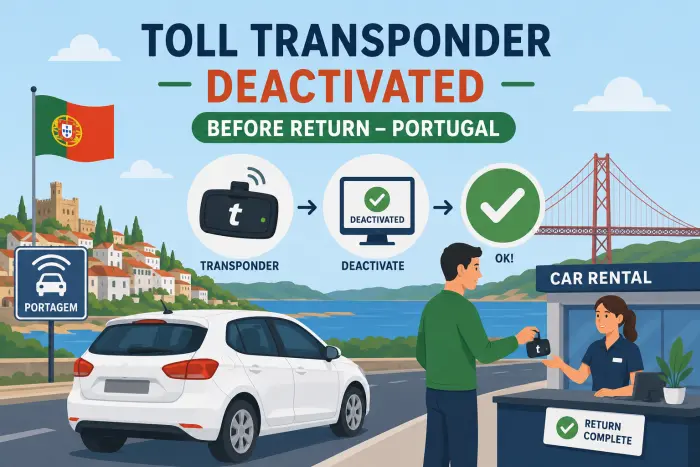
Most toll problems on a Portugal rental car happen because of confusion about how the system works — this one is different. It happens to travelers who understand Via Verde perfectly well, on a road they’ve driven without issue for the entire trip, specifically because the transponder gets switched off a day or two before they actually return the car.
Why this happens
| Cause | Some suppliers deactivate the transponder before return to close out billing cleanly |
| When | Typically the final 1–2 days of the rental period |
| What triggers a problem | Driving an electronic-only toll road during that window |
| Consequence | A fine well above the normal toll, sometimes several times the toll cost, plus admin fees |
| How to avoid it | Confirm deactivation timing at pickup, and plan the last day’s route around it |
Why suppliers do this
Via Verde tolls get billed to the rental company first, who then passes the charge on to the card used for the deposit, following its own billing timeline that can already run weeks behind the actual crossing. To make sure every toll from your specific rental gets captured and none of it slips past the return date into a period where the car might be re-rented to someone else, some suppliers deactivate the transponder before the actual return — closing the billing window a little early rather than risk any ambiguity about which renter owes which charge.
This makes sense from the rental company’s side of the accounting, but it creates a real trap for the renter: the box still looks and feels active, sitting in the same spot on the windshield it’s been in all trip, giving no visible signal that it’s stopped working. Nothing about the car itself changes, and nothing about the driving experience gives any hint that the system behind the transponder has quietly shifted from “actively billing tolls to your rental” to “not registering at all.”
Why this fits a pattern
This isn’t the only place where the final days of a Portugal rental carry disproportionate risk compared to the rest of the trip. Fueling up before return follows a similar logic — a rushed, poorly-timed decision in the last stretch costs more than the same decision made a day earlier would have. The common thread across all of these situations is that rental logistics tighten up specifically around the handover, and a habit that’s worked fine for the rest of the trip can quietly stop applying in that narrow window without any obvious signal that something’s changed — which is exactly why it’s worth treating the last day or two of any Portugal rental with a bit more deliberate attention than the rest of the trip needed.
What actually goes wrong
Many of Portugal’s toll roads — particularly stretches of the A22 in the Algarve and other electronic-only sections — have no barrier and no attended booth at all. The system reads the transponder as you pass under a gantry; if it doesn’t detect an active signal, the crossing gets logged as unpaid rather than declined at the point of entry the way a barrier-based toll might work. There’s no warning light, no beep, nothing that tells you in the moment that the transponder didn’t register — the drive itself feels completely identical to every other toll crossing on the trip.
The bill for that unpaid crossing then follows the same path as any other missed toll: it gets traced to the vehicle’s plate, forwarded to the rental company, and from there to your card — except this time, instead of the normal per-crossing toll rate, it often arrives as a fine, sometimes many times higher than what the toll itself would have cost, plus whatever administrative fee the rental company adds for handling it after the fact. Because this typically surfaces weeks after the trip has ended, it’s easy to assume it’s simply a delayed toll bill rather than recognizing it as the specific deactivation-related fine it actually is — worth checking the amount against what the toll should normally cost before assuming the charge is correct as presented.
How to protect yourself
The most reliable fix is asking directly at pickup: does the transponder stay active through the full rental period, or does it get switched off before the scheduled return? Not every supplier follows this practice, and asking costs nothing — if the answer is that it deactivates early, you now know to plan your last day or two of driving around toll-free routes instead. It’s worth writing down or photographing whatever answer you get, since a verbal confirmation at a busy pickup counter is easy to forget by the time it might actually matter, several days into the trip when the return date is finally approaching.
💸 Don’t Overpay at the Airport
Compare real-time rental deals with no hidden fees or credit card needed.
If you’re not able to get a clear answer, or you’re driving on the final day or two regardless, the safer default is treating any electronic-only toll road as a risk on those specific days — either route around it using the free alternative road, or, if you’re not confident it’s still active, pull off and pay directly at one of the manual payment points that some toll roads still maintain, rather than assuming the box will handle it the way it has for the rest of the trip. A quick web search for the specific toll road’s name plus “manual payment” or “pay station” will usually confirm whether that option exists on your particular route, which removes the guesswork entirely.
This is also a reasonable moment to reconsider the shape of your last day generally — if the return flight or hotel checkout timing means the final drive is already going to be rushed, adding uncertainty about toll status is one more variable worth removing from an already tight day. Building in a slightly earlier return, or choosing a route with fewer or no toll roads for that specific stretch, trades a small amount of convenience for real certainty about the final cost of the trip.
If it’s already happened to you
If a fine like this shows up on your card after the trip, it’s worth contacting the rental company directly rather than assuming the charge is final and correct — it should be identifiable as its own line item on the invoice rather than folded quietly into a broader “tolls” total, which makes it easier to spot and question in the first place. Ask specifically whether the transponder was deactivated before your documented return date, and if so, request the charge be reviewed against the standard toll rate rather than the fine amount — this is a reasonable, specific question that a rental company handling the request in good faith should be able to answer from their own records of when the transponder was switched off. See our complete guide to Portugal’s driving laws for how this fits alongside the rest of the toll system.
Frequently asked questions
Why would my rental car’s toll transponder stop working before I return the car? Some rental companies deactivate it a day or two early to make sure all toll charges from your specific rental get captured cleanly before the car potentially goes to another renter, closing their billing window with certainty.
How would I know if my transponder has been deactivated? There’s usually no visible indicator — the box looks and sits exactly the same whether it’s active or not, which is what makes this risk easy to miss even for an attentive driver who’s been careful about everything else on the trip.
What happens if I drive an electronic-only toll road with a deactivated transponder? The crossing gets logged as unpaid and eventually billed to your card, often as a fine well above the standard toll rate rather than the normal per-crossing charge, plus an administrative fee from the rental company for processing it.
How can I avoid this on the last days of my rental? Ask the rental company directly at pickup whether the transponder stays active through your full return date, and plan your last day or two of driving around toll-free routes if it doesn’t, or confirm a manual payment option exists on your route instead.
Are all Portugal toll roads affected by this risk? Only the electronic-only sections without staffed booths or barriers — routes with manual payment options let you pay directly regardless of transponder status, removing the risk entirely on those specific stretches.
Can I dispute a fine caused by early transponder deactivation? Yes, it’s worth contacting the rental company and asking them to check their own deactivation timing against your actual return date — a legitimate case for review rather than something to simply accept as a fixed, unchallengeable charge.
Does this affect every rental company in Portugal? No — the practice isn’t universal, which is exactly why confirming it directly with your specific supplier at pickup is worth the thirty seconds it takes rather than assuming every company handles this the same way.