Driving to Fátima from Lisbon is a straightforward hour-to-hour-and-a-half trip up the A1 most days of the year, with thousands of parking spaces around the sanctuary and no real complications, but if your visit lands on the 12th or 13th of any month between May and October, the picture changes completely, since these are the pilgrimage dates that draw enormous crowds, choke the roads around the sanctuary, and can turn a simple day trip into hours of unexpected delay and frustration.
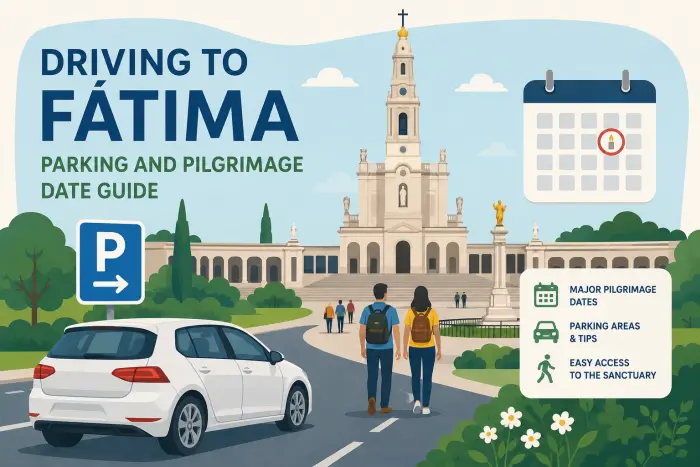
At a Glance
- Fátima is roughly 120-140 km from Lisbon, about 1h15-1.5 hours by car via the A1 motorway, exiting at Fátima/Ourém (Exit 8) onto the N356
- The 12th and 13th of every month from May through October are major pilgrimage dates, with May 13 and October 13 being the two biggest of the year
- On non-pilgrimage days, parking around the sanctuary is genuinely abundant and easy
- On pilgrimage dates, expect significant traffic, overwhelmed parking, and a noticeably different atmosphere, with some pilgrims walking to the site or approaching the esplanade on their knees as an act of devotion
- Visitors are expected to dress modestly and behave respectfully throughout the sanctuary complex, pilgrimage dates or not
The Route From Lisbon: Simple Most of the Year
On an ordinary day, this is one of the easier day trips available from Lisbon by rental car. Head north on the A1 motorway toward Porto, and after roughly an hour, take Exit 8 for Fátima/Ourém, following the N356 the rest of the way into town. The drive is almost entirely motorway, with no unusual navigation challenges, and it’s genuinely one of the more relaxed drives compared to some of Portugal’s narrower coastal or mountain routes. If you’re coming from Porto instead of Lisbon, the same A1 corridor works in reverse, with the journey taking somewhat longer at around two to two and a half hours depending on traffic and your exact starting point.
Normal Day vs. Pilgrimage Day: What Actually Changes
| Normal Day | 12th-13th (May-October) | |
|---|---|---|
| Drive time from Lisbon | ~1h15-1.5h | Can extend well beyond 2 hours near the sanctuary |
| Parking | Abundant, easy to find close to the complex | Overwhelmed, expect to park further out and walk |
| Traffic on N356/local roads | Light to moderate | Heavy, with possible local road closures or redirections |
| Atmosphere | Quiet, contemplative | Large crowds, candlelit processions, some pilgrims walking or approaching on their knees |
| Recommended departure from Lisbon | Flexible | As early as possible |
Why the 12th and 13th Are Completely Different
This is the part that catches visitors off guard if they haven’t checked the calendar first. Fátima marks the anniversary of reported apparitions that occurred on the 13th of the month across six consecutive months in 1917, and pilgrims have gathered on these same dates ever since. May 13th and October 13th, marking the first and final apparitions, draw the largest crowds of the year, sometimes numbering in the hundreds of thousands, with a candlelit procession on the evening of the 12th that’s genuinely moving to witness but comes with serious practical consequences for anyone driving there. Roads around the sanctuary back up significantly, official parking areas fill well beyond capacity, and what’s normally a simple hour-and-change drive can turn into a much longer, more frustrating one.
Should You Avoid the 13th Entirely?
Not necessarily — if witnessing the pilgrimage and procession is part of why you’re visiting, the 12th and 13th are genuinely the most powerful and memorable days to be there. But if you’re simply hoping to see the sanctuary itself without the crowds, and especially if you’re short on time or driving yourself, picking any other day of the month, or visiting outside the May-October pilgrimage season entirely, makes for a dramatically smoother trip.
Practical Tips If You’re Driving on a Pilgrimage Date
If your schedule genuinely only allows a visit on the 12th or 13th, a few adjustments make a real difference. Leave Lisbon considerably earlier than you normally would, since traffic backs up progressively as the day goes on and the worst congestion typically builds through the late morning and afternoon. Expect to park further from the sanctuary than usual and be prepared to walk a meaningful distance from your car to the esplanade itself. And build real flexibility into your return journey, since leaving at the same time as everyone else creates the same congestion in reverse, often making the drive back feel longer than the trip out.
Combining Fátima With Nearby Sights
Fátima sits within a genuinely interesting stretch of central Portugal, and most visitors find it worth combining with more than just the sanctuary itself. It pairs naturally with a broader Silver Coast route that includes Nazaré and Óbidos, and it fits well within the wider set of popular day trips from Lisbon by rental car, especially for visitors who want to see central Portugal beyond the coast. The nearby towns of Tomar, with its striking Convento de Cristo, and the UNESCO-listed monasteries at Batalha and Alcobaça are all within a short additional drive, making it realistic to build a full day, or even an overnight loop, around Fátima rather than treating it as an isolated stop.
Staying on Top of Toll and Fuel Costs
The A1 motorway includes tolled sections, so it’s worth understanding how Via Verde tolls work before setting off, since most rental cars are already fitted with a transponder that bills the charge automatically. The round trip itself is short enough that fuel cost isn’t a major factor on its own, but it’s worth checking realistic rental car fuel costs in Portugal if you’re combining Fátima with a longer loop through central Portugal.
GPS and Navigation Around the Sanctuary
The sanctuary complex itself is enormous, and once you’re within Fátima, GPS apps sometimes struggle to route you sensibly to specific parking areas rather than just the general town center. Having reliable mobile data for GPS use in Portugal helps here, particularly if you need to recalculate your route on a pilgrimage date when normal roads and parking areas may be temporarily closed or redirected.
💸 Don’t Overpay at the Airport
Compare real-time rental deals with no hidden fees or credit card needed.
A Note on Respectful Behavior
Whatever date you visit, it’s worth knowing before you arrive that Fátima functions primarily as an active pilgrimage site rather than a tourist attraction, and many visitors are there seeking comfort during genuinely difficult periods in their lives, whether that’s illness, grief, or personal hardship. Modest dress and quiet, respectful behavior throughout the esplanade and basilica areas are expected, and it’s worth keeping this in mind even if you’re visiting primarily out of curiosity rather than personal faith. If it’s your first time driving in Portugal generally, it’s also worth a quick read of Portugal’s driving rules and roundabout etiquette, since the roads around Fátima and Ourém include several roundabouts on the approach from the motorway exit.
Practical Checklist for Driving to Fátima
- ✅ Check whether your visit date falls on the 12th or 13th of the month, especially between May and October, before finalizing your travel plans
- ✅ On non-pilgrimage days, expect an easy, mostly motorway drive with abundant parking
- ✅ On pilgrimage dates, leave much earlier than usual and expect to park further out and walk
- ✅ Confirm your rental car has a Via Verde transponder for the A1 tolled sections
- ✅ Dress modestly and behave respectfully throughout the sanctuary complex regardless of the date
- ✅ Consider combining the trip with Nazaré, Óbidos, Tomar, or other central Portugal stops to make the most of the drive
Frequently Asked Questions
How far is Fátima from Lisbon by car? Roughly 120-140 km, about 1 hour 15 minutes to 1.5 hours via the A1 motorway under normal traffic conditions, with the drive covering almost entirely motorway kilometers.
What makes the 12th and 13th of the month different for drivers? These are Fátima’s pilgrimage dates, commemorating the anniversary apparitions, and they draw large crowds that create significant traffic congestion and overwhelmed parking, especially during May 12-13 and October 12-13.
Is parking normally difficult at Fátima? No — on non-pilgrimage days there are thousands of parking spaces around the sanctuary complex, and finding a spot is generally easy.
Should I avoid visiting Fátima on the 13th if I’m driving myself? Not necessarily, but you should plan for significantly more time, earlier departure, and a longer walk from parking if you choose to visit on a pilgrimage date.
Can I combine a trip to Fátima with other nearby destinations? Yes — Fátima pairs well with a central Portugal or Silver Coast route that includes Nazaré, Óbidos, and nearby UNESCO sites like Batalha and Alcobaça.
Is there a dress code for visiting Fátima’s sanctuary? Modest dress and respectful, quiet behavior are expected throughout the complex, since it functions as an active place of worship rather than a standard tourist site.
What’s the best time of day to arrive if I’m visiting on a pilgrimage date? As early as possible. Traffic and parking conditions worsen steadily throughout the day on the 12th and 13th, so an early arrival makes the biggest difference.
Is the drive to Fátima difficult for first-time drivers in Portugal? No, it’s one of the more straightforward routes available, running almost entirely on the A1 motorway with a short final stretch on the N356 into town, and it involves none of the narrow, winding roads that make some other Portuguese destinations more challenging for newcomers.