A breakdown is stressful in any car — more so in a rental, in a foreign country, when you’re not sure who to call or what you’re allowed to do. The reassuring truth: rental breakdowns are usually resolved quickly if you follow the right steps, and the biggest mistakes are the avoidable ones — arranging your own repair, not documenting the problem, or panicking on a busy road. This guide gives you the exact procedure for a breakdown or incident in a Lisbon rental car, so you stay safe, stay covered, and get back on the road with minimum fuss.
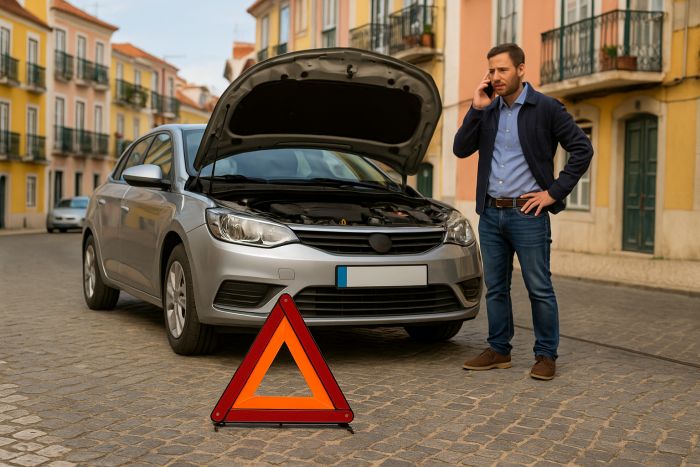
If your rental breaks down, call the rental company’s assistance line first — the number is on your rental agreement and often in the glovebox. Don’t arrange your own tow or repair, or you may not be reimbursed. Before that: get to safety, put on your hi-vis vest, place the warning triangle, and document everything with photos. Stay calm; this is a routine situation for the company.
This is part of our driving in Portugal guides.
First: get to safety
Before anything else, make yourself and your passengers safe. If the car is still moving, signal and pull over as far off the road as possible — onto the hard shoulder on a motorway, or a safe spot off the carriageway. Switch on your hazard lights immediately. Get everyone out on the safe side, away from traffic, and behind a barrier if there is one. On a motorway especially, do not stand in front of or behind the car in the live lane.
Safety comes before paperwork, before phone calls, before everything. The car is replaceable; nobody in it is.
Put on the vest, place the triangle
This is both a safety step and a legal one. Portuguese law requires you to wear the reflective hi-vis vest before exiting the car on a roadside, and to place the warning triangle behind the vehicle to alert other drivers. Both items are mandatory kit and should already be in the car — confirm they’re there when you collect it, as noted in driving rules in Portugal.
Put the vest on inside the car before you step out, then position the triangle at a safe distance behind, further back on faster roads. This protects you and signals to traffic that there’s a hazard ahead.
Call the rental company’s assistance line first
This is the single most important step, and where people go wrong. Your rental agreement includes a 24/7 assistance or breakdown number — call it before doing anything else about the car itself. The company will arrange the appropriate help: roadside assistance, a tow, or a replacement vehicle, depending on the problem and your agreement.
Do not arrange your own tow truck or repair. If you call a random garage or towing service yourself, you may void your cover and lose any reimbursement — the company has its own approved providers and procedures. Even with the best intentions, going off-script can turn a covered breakdown into an expensive bill. Let them coordinate; that’s what the line is for.
If it’s an accident, not just a breakdown
If the breakdown is the result of a collision, a few extra steps apply. Call the emergency services (112) if anyone is injured. Exchange details with any other driver involved, photograph the scene thoroughly, and complete an accident statement if provided. Crucially, never admit liability at the scene — state the facts and let the insurers determine fault. Then call the rental company’s line as above. How insurance and excess work in these situations is covered in Portugal car rental insurance explained, and watch for the disputed-charge tactics noted in how to avoid car rental scams in Portugal.
Document everything
Whether it’s a breakdown or a bump, your photos are your protection. Capture the car’s position, any damage, the surroundings, and — in an accident — the other vehicle and its plate. Note the time, location and what happened. Keep every document the assistance provider or company gives you. This record matters later, when your deposit is being released or any charge is being assessed; without it, you’re relying on the company’s account alone. A few minutes of photos can save a dispute weeks afterward.
💸 Don’t Overpay at the Airport
Compare real-time rental deals with no hidden fees or credit card needed.
Common breakdown causes — and quick checks
Not every “breakdown” is mechanical. Before assuming the worst, a calm check can save a call:
| Issue | Quick check |
|---|---|
| Won’t start | Is it in the right gear/park? Battery? |
| Warning light | Check the manual; some are minor |
| Flat tyre | Many cars have a kit or spare |
| Out of fuel / charge | Easy to overlook on a long drive |
| Locked out / key issue | Call assistance — don’t force it |
For a genuine mechanical fault, always defer to the assistance line. But ruling out the simple things — handbrake, gear, fuel level — first can occasionally get you moving without any wait at all.
Preventing a breakdown in the first place
Most rental breakdowns aren’t mechanical failures — they’re avoidable oversights, and a little care at pickup prevents the majority of them. When you collect the car, do more than the damage check: confirm the fuel or charge level, glance at the dashboard for any warning lights already showing, and check that the mandatory kit is present. On the road, keep an eye on the fuel gauge well before it gets low, since rural Portugal has fewer stations than you might expect, and don’t ignore a warning light hoping it’ll go away. For an electric rental, plan charging stops rather than gambling on range. None of this is onerous, and it dramatically cuts the odds of finding yourself on a hard shoulder. The best breakdown is the one that never happens, and a two-minute check at the desk plus sensible habits on the road is most of what it takes to avoid one entirely.
What happens after you call
Knowing what to expect once you’ve phoned the assistance line keeps the wait calm. The operator will take your details, your location (have a road name, junction number or landmark ready), and a description of the problem, then dispatch the appropriate help — a roadside mechanic for minor faults, a tow for serious ones, sometimes a replacement vehicle. They’ll give you an idea of timing and tell you whether to wait with the car or somewhere safer nearby. Keep your phone charged and stay reachable, since the provider may call to confirm your exact spot. If you’ve been given a replacement car, check it over at handover just as you would any rental. Throughout, keep your paperwork and photos together, because they’ll matter when your original rental is reconciled and your deposit released. Handled this way, even a serious breakdown becomes a sequence of clear steps rather than a panic — which is exactly why following the procedure from the first moment pays off.
Your breakdown checklist
In order, every time:
- Get to safety — pull over, hazards on, everyone out on the safe side.
- Vest on, triangle out — before you stand on the roadside.
- Call the assistance line on your rental agreement — first, always.
- Don’t DIY the tow or repair — it can void your cover.
- Document everything with photos and notes.
- For accidents, call 112 if needed, swap details, admit nothing.
Follow this order and even a roadside breakdown stays a manageable inconvenience rather than a crisis. For the wider picture of common rental car problems and how each one gets resolved, see our complete guide.
FAQ
What should I do first if my rental car breaks down in Lisbon? Get to safety — pull over, switch on hazards, and get everyone out on the safe side. Then put on your hi-vis vest, place the warning triangle, and call the rental company’s assistance line.
Who do I call if my rental breaks down? The rental company’s 24/7 assistance number, found on your rental agreement and often in the glovebox. Call them before arranging anything yourself, so help is coordinated and covered.
Can I arrange my own repair or tow? No — doing so can void your cover and lose you any reimbursement. The company uses approved providers, so always call their assistance line and let them organise help.
What if I have an accident, not just a breakdown? Call 112 if anyone’s injured, exchange details, photograph the scene, never admit liability, and then call the rental company. Complete any accident statement provided.
What equipment do I need in a breakdown? A reflective hi-vis vest (worn before exiting) and a warning triangle (placed behind the car) are legally required and usually supplied with the rental. Check they’re in the car at pickup.
Will I be charged for a breakdown? For a genuine mechanical fault, usually not — that’s the company’s responsibility. Charges arise from damage you caused or from arranging unauthorised repairs, which is why documenting everything and using the assistance line matters.