Nobody plans for a rental car accident, which is exactly why it helps to know the sequence before you’re standing on the side of a Portuguese motorway working it out for the first time. The steps themselves aren’t complicated, but doing them in the right order — and knowing which calls to make first — makes a genuinely stressful ten minutes considerably more manageable, and can meaningfully affect how smoothly the insurance and deposit process goes afterward.
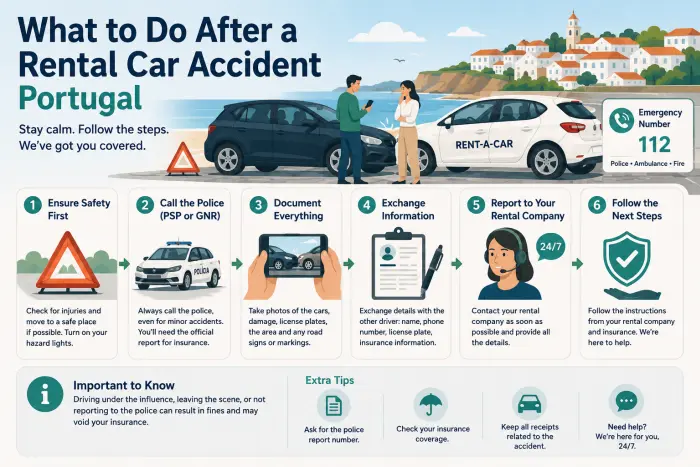
The sequence, in order
| Step | What to do |
|---|---|
| 1 | Check for injuries; call 112 if anyone is hurt or the road is blocked |
| 2 | Put on the reflective vest before exiting the vehicle |
| 3 | Place the warning triangle behind the car |
| 4 | Move to a safe position off the road |
| 5 | Document everything — photos, other party’s details |
| 6 | Call the rental company’s roadside assistance number |
| 7 | Get a police report if required or if there’s a dispute |
Before you even get out of the car
Portuguese law is specific about the order here, and it’s worth knowing this before it matters: if anyone needs to exit the vehicle, the reflective vest goes on first, before opening the door — not fished out of the trunk after you’re already standing on the roadside. The warning triangle then gets placed behind the vehicle, roughly 30 meters back under normal conditions or 100 meters on a motorway, to give approaching traffic enough warning to react.
Both items are legally required equipment in a Portuguese-registered vehicle, and rental cars almost always come with them — typically in the glove compartment or trunk, sometimes both a triangle and a spare vest for a passenger. It’s worth locating them during the initial walk-around at pickup rather than discovering their location for the first time in an actual emergency. There’s some nuance in how strictly this applies to foreign-registered vehicles versus Portuguese-registered ones, but a domestic rental car falls under the standard requirement regardless of the driver’s nationality, so treat it as mandatory rather than optional — see our breakdown of the mandatory safety kit for what should already be in the car and where to check for it.
If anyone is injured, if the road is blocked, or if the situation feels unsafe in any way, call 112 — Portugal’s general emergency number — before anything else. This isn’t a step to skip in favor of handling things privately between drivers; 112 dispatches police, ambulance, or both depending on what you report, and getting that call in early matters more than any of the paperwork that follows. On Portuguese highways specifically, official roadside assistance vehicles patrol regularly and sometimes arrive at a stopped vehicle without being called at all — a useful thing to know if you’re stranded somewhere without reliable phone signal.
Documenting the scene
Once everyone is safe, the next priority is documentation, and this is worth doing thoroughly even for what looks like minor damage — it directly affects any later damage dispute with the rental company. Photograph the vehicles from multiple angles, the position of both cars relative to the road, any visible damage close-up, and the surrounding area including relevant signage or road markings. If the other party is willing, exchange names, contact details, license plate numbers, and insurance information — most Portuguese rental cars carry an accident report form (a “European Accident Statement” or constat amiable) in the glove box alongside the registration paperwork, which both drivers fill out and sign at the scene when there’s no injury and no dispute about fault.
This form matters more than it might seem in the moment — it’s the primary document your insurer and the rental company will reference afterward, and having it completed and signed at the scene avoids a slower, messier process of reconstructing what happened days later from memory.
Calling the rental company
This is a step people sometimes delay, mistakenly treating the accident as something to sort out with their own insurance first and the rental company later. Do it the other way around: call the rental company’s roadside or emergency assistance number — usually printed on a sticker inside the windshield or on the rental agreement itself — as soon as the immediate safety steps are handled. They’ll tell you specifically what they need from you, whether they’re sending their own assistance, and what happens next with the vehicle itself, which might mean a replacement car, a tow, or continuing to drive it if it’s still safe to operate — the same roadside assistance process covers a straightforward breakdown, not just an accident.
Skipping this call, or delaying it significantly, can complicate an insurance claim later — rental companies generally expect to be notified promptly, and their own policies sometimes specify a reporting window, often within 24 hours of the incident regardless of when you actually return the vehicle.
💸 Don’t Overpay at the Airport
Compare real-time rental deals with no hidden fees or credit card needed.
When you need a police report
Not every minor accident requires police involvement in Portugal, but several situations do: any injury, any dispute about fault, damage above a certain threshold, or an accident involving a vehicle that leaves the scene. When in doubt, it’s safer to involve the police (via the same 112 call, or the non-emergency line if the situation clearly doesn’t need urgent dispatch) than to skip it and later find the rental company or your insurer requires a report you don’t have.
The police report becomes part of the documentation trail alongside the accident statement form and your own photos — all of which typically get requested when the rental company or insurer processes the claim afterward. This paperwork trail also matters for how your security deposit gets handled — a well-documented accident with a completed statement form tends to move through the hold-and-release process faster than one where the rental company has to reconstruct events from limited information.
After the immediate scene
Once the on-the-spot steps are done, keep every piece of paperwork — the accident statement, any police report reference number, photos, and the rental company’s own incident reference if they assign one. Follow up with the rental company or your insurance provider (whichever holds your coverage — the company’s own policy, a credit card’s rental coverage, or a separate excess waiver, all covered in our guide to rental car insurance in Portugal) to formally open the claim, and keep records of every communication in case the process runs longer than expected, which unfortunately happens more often than anyone would like. If any of the terminology in the claims process is unfamiliar, our glossary of CDW, excess, and deductible terms covers what each one actually means for your bill.
Frequently asked questions
What’s the very first thing I should do after a rental car accident in Portugal? Check for injuries and call 112 if anyone is hurt or the road is blocked. If it’s safe to exit the vehicle, put on the reflective vest before opening the door.
Do I always need to call the police after a rental car accident? Not always — minor accidents with no injury and no dispute about fault can sometimes be resolved with the European Accident Statement form alone. Call the police (via 112) if anyone is injured, there’s a dispute, or damage looks significant.
Should I call my rental company or my insurance company first? Call the rental company first, using the emergency number on your agreement or the windshield sticker — they’ll guide you on next steps for the vehicle itself, and most claims processes expect prompt notification to the rental company regardless of which insurance ultimately covers the cost.
What is the European Accident Statement form? A standard two-part form (often called a constat amiable) that both drivers fill out and sign at the scene, recording the circumstances of the accident. It’s usually kept in the glove box of a Portuguese rental car alongside the registration documents, and having it properly completed at the scene saves considerable back-and-forth later.
Is a reflective vest actually required by law in a rental car in Portugal? Yes, for Portuguese-registered vehicles, which covers standard rental cars regardless of the driver’s nationality. It must be put on before exiting the vehicle in an emergency, not retrieved from the trunk afterward.
What happens to my rental if the car isn’t drivable after an accident? The rental company typically arranges a tow and a replacement vehicle, coordinated through the same emergency call — this is part of what they’ll walk you through once you reach them, and it’s one more reason calling them promptly matters as much as it does.
Will a rental car accident affect my deposit or final charges? Likely yes, at least temporarily — expect the company to hold or adjust the deposit while the claim is assessed, with final charges depending on your insurance coverage and who’s found at fault.