Sweeping across the Tagus estuary on the eastern edge of Lisbon, the Vasco da Gama Bridge is one of the longest in Europe — and if your rental takes you south or east out of the city, you may well drive it. It’s a dramatic, easy crossing, but there’s one thing worth sorting in advance: the toll, and how your hire car handles it. Here’s the complete guide to crossing it with confidence.
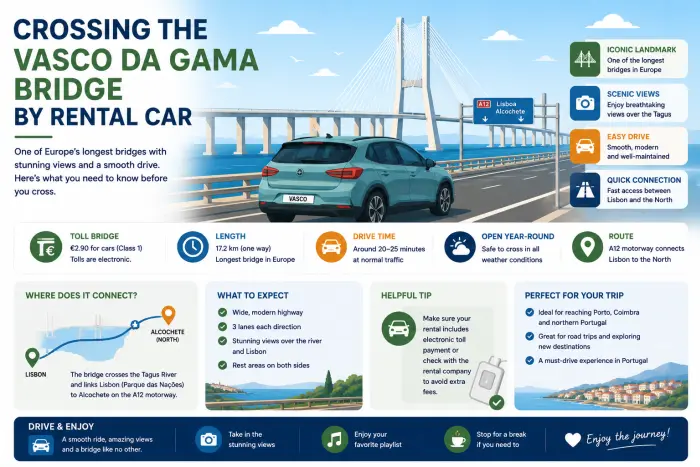
- The Vasco da Gama Bridge spans the Tagus on Lisbon’s eastern side — one of Europe’s longest.
- It’s tolled in one direction — usually when heading toward Lisbon from the south.
- Your rental’s electronic toll device handles the charge; confirm the setup at pickup.
- The crossing is long and exposed — expect wind on the open spans.
- It’s the eastern alternative to the 25 de Abril Bridge on the west.
What the Vasco da Gama Bridge is
The Vasco da Gama Bridge is a vast structure crossing the Tagus estuary near the Parque das Nações district on Lisbon’s eastern side, linking the city area to the south bank around Montijo and Alcochete. Stretching roughly twelve kilometres including its approaches, it’s among the longest bridges in Europe, and driving it is a genuinely memorable experience — a long, low ribbon of road over the wide estuary. For most travellers it’s simply the fast, scenic way in or out of Lisbon to the south and east. Our overview of renting a car in Portugal covers the fundamentals for any such drive.
When you’ll cross it
You’ll typically meet the Vasco da Gama Bridge if your route takes you between Lisbon and the south or east — heading out toward the Alentejo, the eastern Algarve approaches, or simply crossing the estuary from the airport and Parque das Nações side. Because it sits on the eastern edge of the city near Humberto Delgado Airport, it’s often the natural crossing for drivers picking up at the airport and heading south. Our guide to day trips from Lisbon by rental car includes routes where the bridge comes into play.
The toll: how it works with a rental
Here’s the practical detail to get right. The Vasco da Gama Bridge is tolled, with the charge applied in one direction — typically when travelling from the south bank toward Lisbon. Like much of Portugal’s motorway network, the tolling is electronic, so there are no cash booths to worry about; the charge is read automatically.
For a rental car, this is normally handled by an electronic toll device (transponder) fitted to the vehicle, which registers the crossing and bills the toll through the rental company, often with a small service fee. The key is to confirm how your specific rental handles tolls when you collect the car, so you know whether a device is active and how you’ll be charged. Our guide to toll roads in Portugal explains the systems and how hire cars deal with them in full, which applies to the bridge just as it does to the motorways.
Driving the bridge
The crossing itself is straightforward, but a few things are worth knowing:
- 💨 Wind. Being long and exposed over open water, the bridge can be breezy — keep a firm, steady hold and don’t be alarmed by gusts.
- 🚗 Keep your pace. It’s a fast road; maintain the flow of traffic and stay in lane.
- 🚫 No stopping. You can’t pull over to admire the view — enjoy it as you drive.
- ⛽ Fuel up first. It’s not the place to run low; make sure you’ve enough before you set off.
Our guide to driving rules in Portugal covers the wider road rules, and setting your navigation before you approach helps — see our GPS and navigation tips.
Vasco da Gama or 25 de Abril?
Lisbon has two great Tagus crossings, and knowing the difference helps you route sensibly:
| Bridge | Where | Best for |
|---|---|---|
| 🌉 Vasco da Gama | Eastern Lisbon (Parque das Nações) | South/east routes, airport side |
| 🌉 25 de Abril | Western Lisbon | Central/western crossings, Setúbal side |
The Vasco da Gama is usually the natural choice heading south or east, especially from the airport area, while the 25 de Abril suits crossings on the western side of the city. Your navigation will normally pick the sensible one, but knowing both exist helps you understand the route.
💸 Don’t Overpay at the Airport
Compare real-time rental deals with no hidden fees or credit card needed.
Making the crossing smooth
None of this is complicated, and a little preparation makes the bridge a highlight rather than a worry. Confirm your rental’s toll arrangement when you collect the car, so the charge is handled cleanly. Set your navigation before you approach, since the junctions on and off the bridge come quickly. Make sure you’ve got enough fuel, keep a steady hold against any wind, and simply enjoy the sweeping views of the estuary as you cross. Our walkthrough on how to rent a car at Lisbon Airport covers the pickup process where you can ask about the toll setup, and our roundup of the best companies at Lisbon Airport helps you choose a provider.
More than just a crossing
It’s easy to think of the Vasco da Gama Bridge as simply a piece of infrastructure to get across, but for many travellers it becomes a small highlight of the drive in its own right. Because it runs so low and so long over the wide, open estuary, the experience is unlike a typical bridge — for a couple of minutes you’re gliding across water with the city behind you and the horizon ahead, which is a genuinely striking way to begin or end a journey south. Approached in the right frame of mind, it turns a routine departure from Lisbon into a memorable one.
That said, the smart traveller treats it with the same light preparation as any part of a rental drive. The single most common source of confusion isn’t the driving at all — it’s the toll, and specifically not knowing in advance how the hire car will be charged for it. Sorting that one detail at pickup removes the only real uncertainty, leaving nothing but an easy, scenic crossing. Everything else — the wind, the length, the pace — is simply normal motorway driving on a grand scale.
It’s also worth remembering that the bridge is a gateway rather than a destination. Cross it heading south and you open up the Alentejo’s plains, the road toward the Algarve, and countryside that feels a world away from the capital despite being minutes from it. In that sense the crossing is a fitting symbol of what a rental car offers in the first place: the freedom to leave the city easily behind and reach the quieter, wider Portugal on the other side. Handle the toll, keep a steady hold, and enjoy the ride.
Tips
- 🧾 Confirm the toll device and billing at pickup.
- 🧭 Set navigation early — the junctions come fast.
- ⛽ Fuel up before a long crossing.
- 💨 Hold steady against wind on the open spans.
- 🚫 Don’t stop on the bridge — enjoy the view as you drive.
FAQ
Is there a toll on the Vasco da Gama Bridge? Yes. The bridge is tolled, with the charge applied in one direction — typically when travelling from the south bank toward Lisbon. The tolling is electronic, so there are no cash booths; the charge is read automatically as you cross.
How does the toll work in a rental car? Rental cars normally have an electronic toll device fitted, which registers the crossing and bills the toll through the rental company, often with a small service fee. Confirm how your specific rental handles tolls when you collect the car.
When would I cross the Vasco da Gama Bridge? Usually when heading between Lisbon and the south or east — toward the Alentejo, eastern routes, or crossing from the airport and Parque das Nações side. It sits on Lisbon’s eastern edge, so it’s often the natural crossing for airport pickups heading south.
Is the Vasco da Gama Bridge hard to drive? Not at all — it’s a straightforward, fast road. Just be ready for wind on the long, exposed spans, keep a steady hold and maintain the traffic flow, and don’t plan to stop, as you can’t pull over on the bridge.
What’s the difference between the Vasco da Gama and 25 de Abril bridges? The Vasco da Gama is on Lisbon’s eastern side near Parque das Nações and suits south and east routes, while the 25 de Abril is on the western side. Your navigation usually picks the sensible one for your journey.
Should I fuel up before crossing? It’s wise. The bridge is long and there’s nowhere to stop, so make sure you have enough fuel before you set off. It’s simply good practice for any long crossing rather than a strict requirement.