A confirmed rental reservation in Portugal doesn’t always guarantee an actual car waiting for you at the counter, and when it doesn’t, the pressure to accept an expensive on-the-spot “upgrade” just to leave the airport with any vehicle at all is a real, documented problem, not a rare edge case. Knowing the difference between a genuine sold-out situation and a forced paid workaround, and who’s actually responsible for fixing it, makes a real difference in what happens next.
What Actually Happens Here
- A confirmed booking reserves a car category, not a specific physical vehicle, which is how “no car available” situations happen even with a paid, confirmed reservation
- If you booked through a broker (a comparison platform rather than the rental company directly), the broker and the local operator are separate entities, and each can blame the other when something goes wrong
- A genuine category sellout typically results in a free upgrade at no extra cost; being asked to pay more for the only available car is a different, more serious situation
- Documentation matters enormously here: get any price difference confirmed in writing, and note clearly that it wasn’t a voluntary upgrade if that’s the case
- Your right to dispute or seek compensation depends heavily on what you can actually document happened at the counter
- This scenario is distinct from typical counter upsell pressure, where a car is available but staff push extras; here, the car itself simply isn’t there
Why This Happens: Overbooking and Broker Confusion
Rental companies, like airlines, generally overbook categories to some degree, betting that not every reservation will actually show up. Most of the time this works out fine. When it doesn’t, and every car in your booked category is genuinely gone, you’re left as the person standing at the counter with a confirmed reservation and no vehicle. This gets more complicated when you’ve booked through a broker or comparison platform rather than directly with the rental brand, since the local operator running the actual counter, sometimes a smaller company trading under a bigger brand’s name, may have no record of your booking at all, or a different understanding of what was promised than what the broker’s confirmation email states.
Free Upgrade vs. Forced Paid Upgrade: Know the Difference
This distinction matters a lot for how you should respond.
| Situation | What’s Happening | How to Respond |
|---|---|---|
| Your category is sold out, a better car is offered free | Standard, common overbooking management | Generally fine to accept, no pushback needed |
| You’re told to pay extra for the only available car | A forced substitution, not a true upgrade | Document everything, get terms in writing before signing |
| Local operator has no record of your broker booking | Broker/operator communication failure | Show your confirmation, ask for it to be honored or escalated in writing |
| Staff pressure you to “just accept it” verbally with no paperwork | Weak accountability, hard to dispute later | Insist on written documentation before agreeing to anything |
If your specific car isn’t available but a larger, better car is offered at no additional cost, that’s a standard, common practice and generally not something to push back on. It’s a completely different situation if staff tell you the only way to leave with a vehicle at all is to pay extra for a bigger or pricier car than what you booked and paid for. That’s not really an upgrade in the normal sense, it’s a forced substitution dressed up as one, and it’s worth treating it differently.
What to Actually Do at the Counter
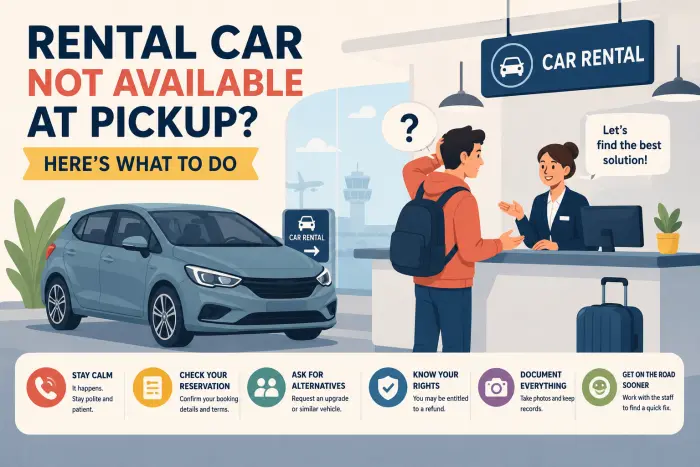
If you’re facing this situation in the moment, a few things genuinely help. Ask directly and calmly whether any car in your booked category or price range is available anywhere on the lot, rather than accepting the first “no” as final. If you’re told the only option is a paid upgrade, ask for that to be noted clearly on your paperwork as not your choice, and get the price difference confirmed in writing before you sign anything. Photograph or keep a copy of whatever documentation you’re given, since this becomes your evidence if you dispute the charge later.
Who’s Actually Responsible: Broker or Local Operator?
This is genuinely murky, and it’s exactly why documentation matters so much. If you booked through a broker like a comparison platform, the broker will often point to the local rental operator as responsible for fulfilling the reservation, while the local operator may claim the broker oversold availability or didn’t confirm correctly on their end. Neither party has much incentive to take clear responsibility, which is why getting written confirmation at the moment of the problem, rather than relying on verbal promises, matters enormously if you need to pursue a refund or compensation afterward.
Comparing Broker Reliability Before You Book
Not all booking platforms and the local operators they work with have equally reliable track records for this specific problem. It’s worth reading our breakdown of rental conditions score versus general supplier rating on Discovercars before booking, since a company’s overall star rating doesn’t always reflect how often this specific no-car-available scenario gets reported by past customers.
After the Fact: Disputing a Forced Upgrade Charge
If you’ve already paid for a forced upgrade and want to pursue getting some or all of it back, your documentation from the counter is the foundation of any case you make. It’s worth reading through our guide on credit card chargebacks for disputed rental charges, and if the dispute involves a cross-border booking through an international platform, European conciliation services for rental complaints may also be a relevant avenue worth exploring.
Keeping Your Own Paperwork From the Start
This entire situation is considerably easier to navigate if you already have your own copy of your original booking confirmation and rental agreement, rather than relying on whatever the counter staff hands you in the moment. Our advice on keeping your own copy of the rental agreement is worth reading before you even arrive, since having your original confirmed terms on hand strengthens your position considerably if a dispute over what was actually promised comes up later.
💸 Don’t Overpay at the Airport
Compare real-time rental deals with no hidden fees or credit card needed.
Recognizing When This Crosses Into a Scam
Most no-car-available situations are genuine overbooking problems rather than deliberate scams, but it’s worth knowing the difference. Our broader guide to avoiding car rental scams in Portugal covers patterns worth watching for if a “no car available” situation starts to feel less like an honest mistake and more like a deliberate bait-and-switch tactic used to pressure a more expensive booking.
Reading Your Paperwork Correctly Once You Do Get a Car
Once you’ve resolved the immediate situation and have a car, whether it’s your original booking or a substitute, it’s worth understanding exactly what ends up on your final invoice as a result. Our guide to decoding your rental car invoice covers how to read the line items you’ll end up with, which matters especially if your final bill includes an unplanned upgrade charge you’ll want to track and potentially dispute.
Practical Checklist If Your Car Isn’t Available
- ✅ Ask directly whether anything in your booked category or price range exists anywhere on the lot before accepting “no” as final
- ✅ Distinguish between a free upgrade (generally fine) and a forced paid substitution (worth documenting and potentially disputing)
- ✅ Get any price difference and the circumstances of the substitution confirmed in writing before signing
- ✅ Keep your own copy of the original booking confirmation, ideally accessible on your phone at the counter
- ✅ Note whether you booked through a broker or the rental company directly, since this affects who you’ll need to pursue for a resolution
- ✅ Follow up promptly after your trip if you believe you were forced into an unfair charge, since documentation fades in usefulness the longer you wait
Frequently Asked Questions
Does a confirmed rental reservation guarantee a specific car will be waiting for me? Not exactly. A confirmed booking reserves a car category, not a specific physical vehicle, which is why “no car available” situations can happen even with a paid, confirmed reservation.
Is being offered a free upgrade the same as this problem? No. A free upgrade at no extra cost is a normal, common practice. This issue specifically involves being asked to pay more for the only available vehicle, which is a different and more serious situation.
Who’s responsible if I booked through a broker and the local operator has no record of my reservation? This is often disputed between the broker and the local rental operator, which is exactly why getting written documentation at the time of the problem matters so much for any later dispute.
What should I do in the moment if there’s no car in my booked category? Ask directly if anything is available anywhere on the lot, and if a paid substitution is genuinely the only option, get the price difference and circumstances confirmed in writing before signing.
Can I get my money back if I was forced to pay for an upgrade? Potentially, particularly if you have clear documentation from the counter. A credit card chargeback or a formal complaint through the booking platform are both worth pursuing depending on the specifics.
Is this situation common in Portugal specifically, or is it a general rental industry problem? It happens in Portugal as it does elsewhere, often tied to broker bookings with smaller local operators rather than being unique to any one country or company.
How can I reduce the risk of this happening to me? Checking a company’s specific rental conditions reputation, not just its overall star rating, before booking is one of the more effective ways to reduce this risk, since some suppliers have more documented complaints about this exact scenario than others.
Should I just accept the forced upgrade to avoid a scene at the counter? You can accept it in the moment to avoid a prolonged confrontation, but that doesn’t mean you have to accept the charge as final. Documenting it clearly at the time preserves your ability to dispute it afterward.