A rental car parked at a scenic viewpoint or trailhead, with visible luggage inside, is exactly the kind of opportunistic target that break-ins across much of Europe tend to focus on, and Portugal is no exception to this general pattern. This isn’t a reason for alarm, most trips pass entirely without incident, but a handful of simple, low-effort habits meaningfully reduce the risk compared with treating a parked rental car the same way you’d treat a locked car back home in a familiar neighborhood.
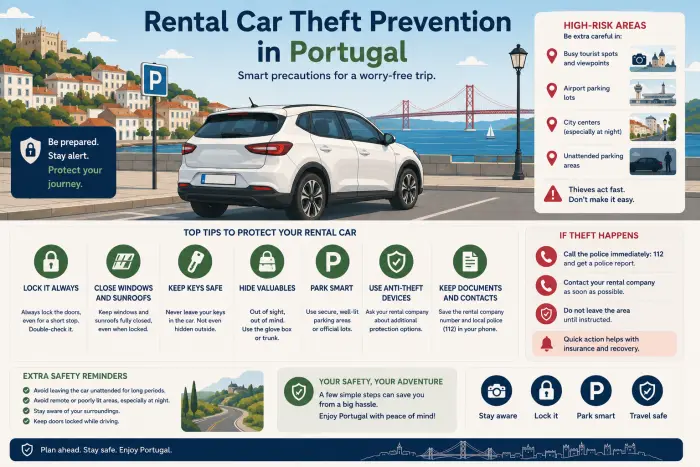
The single most effective habit is simple: never leave visible bags, electronics, or valuables in the car, even briefly, even in the boot if it’s easily identifiable as a rental. Choosing well-lit, populated parking areas over isolated scenic pull-offs for anything longer than a quick stop further reduces the already modest risk.
Why Rental Cars Specifically Get Targeted
Rental vehicles are sometimes identifiable to an opportunistic thief through visible rental company branding, a specific plate format, or simply the pattern of tourist-heavy parking areas where rentals cluster together, making them a slightly more attractive target than an average locally-plated vehicle parked in the same general area. This isn’t a Portugal-specific phenomenon, it’s a general European travel pattern, but it’s worth being aware of specifically when choosing where to park and what to leave visible inside the vehicle throughout your trip.
The Habits That Actually Matter Most
| Habit | Why It Helps |
|---|---|
| Never leave visible bags or electronics in the car | Removes the visible incentive that draws an opportunistic break-in in the first place |
| Choose populated, well-lit parking over isolated pull-offs | Reduces the time and privacy a break-in would require |
| Store valuables in the boot before arriving, not after | Avoids signaling to anyone watching that something was just moved out of sight |
| Keep the car locked even for brief stops | A surprising share of break-ins happen during quick “just a minute” stops |
Scenic Viewpoints and Trailheads: The Highest-Risk Locations
Isolated parking areas at scenic viewpoints, coastal lookouts, or trailhead starting points carry meaningfully higher risk than a supervised city car park or a busy shopping center lot, simply due to lower foot traffic and less natural surveillance. If your itinerary includes stops at these kinds of locations, planning ahead to take valuables with you rather than leaving them in the car, even for what feels like a brief walk, is worth the minor inconvenience given how specifically these locations feature in break-in patterns across similar destinations.
What to Do With Luggage During a Multi-Stop Day
For a day involving several stops, hotel check-out in the morning followed by sightseeing before reaching your next accommodation, luggage sitting in the car for an extended period is a genuine practical challenge worth planning around rather than ignoring. Covering luggage with a blanket or trunk cover so it’s not visible through the windows, parking in a supervised location for longer stops, and avoiding leaving the same vehicle visibly loaded with bags at multiple scenic stops throughout a single day all reduce the cumulative exposure compared with treating every stop identically.
Does This Affect Your Insurance Coverage?
Worth checking specifically rather than assuming standard coverage handles theft of personal belongings, since rental car insurance and the vehicle’s own coverage typically protect the car itself, not your personal items inside it. Personal belongings are generally covered, if at all, under separate travel insurance rather than the rental agreement, which is worth confirming before your trip if you’re carrying anything genuinely valuable. See our Portugal car rental insurance explained guide for how vehicle-focused coverage works, distinct from personal belongings protection.
Overnight Parking at Accommodation
Where you park for the night matters as much as where you stop during the day, and it’s worth factoring into accommodation choices for a road trip specifically. Accommodation with secure, gated, or monitored parking is worth prioritizing over a random street spot for an overnight stay, particularly if the car will be loaded with luggage overnight rather than emptied at check-in. If your accommodation doesn’t offer this directly, asking about the nearest secure public parking option before you arrive, rather than discovering the neighborhood’s parking situation after dark, is a small amount of advance planning that meaningfully reduces overnight exposure.
Does the Rental Company’s Own Branding Increase Risk?
Somewhat, based on general patterns across similar destinations, since visible rental company branding, a bumper sticker, a specific plate holder, or a dashboard placard, can make a vehicle more identifiable as a rental to anyone specifically targeting tourist vehicles. Some travellers choose to remove any removable rental branding once they’ve left the counter, though this is a minor, optional precaution rather than a significant risk factor on its own, worth weighing against the modest effort involved rather than treating as essential.
Vehicle Theft vs a Break-In: A Different Scenario
Worth distinguishing from a break-in targeting visible belongings: theft of the entire vehicle is a considerably rarer event for a rental car specifically, since most modern rental fleet vehicles include factory-standard immobilizers and, increasingly, GPS tracking that rental companies monitor as part of their own fleet management. This doesn’t mean vehicle theft is impossible, but it’s a meaningfully different risk profile than the much more common scenario of an opportunistic break-in targeting visible items left in an otherwise secure, locked car, which is the primary focus worth your actual attention and precaution during a trip.
💸 Don’t Overpay at the Airport
Compare real-time rental deals with no hidden fees or credit card needed.
If a Break-In Does Happen
Report it to local police promptly, both for a formal record and because you’ll typically need a police report reference for any insurance claim, whether that’s travel insurance for stolen belongings or a report to the rental company regarding vehicle damage from the break-in itself. Contact your rental company directly as well, since vehicle damage from a break-in, a broken window or forced lock, is a different category from the theft of your belongings and needs to be reported to them specifically as part of the vehicle’s own condition record.
City Parking vs Rural and Coastal Stops
Central Lisbon and Porto’s more heavily monitored parking areas, particularly staffed garages, generally carry lower risk than an unattended rural or coastal pull-off, simply due to visibility and foot traffic differences between the two settings. Our Lisbon parking guide for tourists covers where to find these more supervised options within the city specifically, worth prioritizing over a free but isolated street spot if you’re leaving the car for an extended period with anything inside it worth protecting.
Building the Habit Into Your Daily Routine
The travelers who navigate a road trip without any theft-related incident generally aren’t relying on luck so much as a consistent, almost automatic habit: checking the car is empty of visible valuables and locked every single time they walk away, regardless of how quick the stop feels or how safe the specific location seems in the moment. Treating this as a routine step at the end of every stop, the same way you’d automatically check you have your phone and keys, removes the need to judge each individual location’s risk level on the fly, which is a more reliable approach than trying to assess safety case by case throughout a busy travel day.
Rental Car Theft Prevention Checklist for Portugal
- Never leave visible bags, electronics, or valuables in the car, even briefly
- Favor well-lit, populated parking over isolated scenic pull-offs for longer stops
- Move valuables out of sight before arriving at a stop, not after parking
- Keep the car locked at all times, including short stops
- Confirm your travel insurance covers personal belongings, since rental car insurance typically doesn’t
See our complete guide to Portugal rental car problems for how this compares to other issues and their right response.
Frequently Asked Questions
Is rental car theft a common problem in Portugal specifically? It’s not dramatically more common than the general European pattern of opportunistic break-ins targeting visible valuables in parked cars, particularly at tourist-heavy scenic stops, rather than a Portugal-specific risk.
Does rental car insurance cover stolen personal belongings from inside the car? Generally not. Rental car insurance typically covers the vehicle itself, not your personal items, which are usually covered, if at all, under separate travel insurance.
What’s the single most effective way to reduce break-in risk? Never leaving visible bags, electronics, or valuables in the car, even briefly, which removes the primary visible incentive that draws an opportunistic break-in.
What should I do if my rental car is broken into during my trip? Report it to local police promptly for a formal record, then contact your rental company directly to report any vehicle damage separately from a travel insurance claim for stolen belongings.
Is overnight parking more risky than daytime stops for a rental car? It can be, particularly if the car is loaded with luggage overnight. Choosing accommodation with secure or monitored parking is worth prioritizing over a random street spot for overnight stays.
Does removing rental company branding reduce break-in risk? It’s a minor, optional precaution some travellers take, since visible branding can make a vehicle more identifiable as a rental, though it’s not a major risk factor requiring significant effort on its own.
For the broader documentation habit that protects you in any dispute with the rental company, see avoiding a rental car damage dispute in Lisbon. To compare suppliers before booking, our best car rental companies at Lisbon Airport roundup is a useful starting point.