When planning a road trip through Portugal — whether you’re exploring Lisbon’s coastal charm, driving through Douro Valley vineyards, or discovering hidden Algarve beaches — one of the first questions you’ll face is:
Should I rent a manual or automatic car?
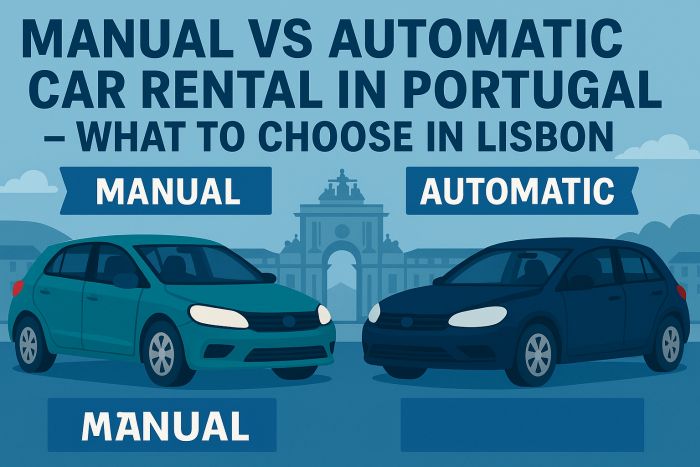
While in the U.S., Canada, and parts of Asia automatics dominate, in Portugal manual (stick shift) cars are still the majority. Your decision will impact price, availability, driving comfort, and trip flexibility.
This guide explains the differences, costs, and scenarios where one type might be better than the other — plus insider tips for tourists renting in Portugal for the first time.
📊 Quick Comparison – Manual vs Automatic
| Feature | Manual 🚙 | Automatic 🚗 |
|---|---|---|
| Availability | High | Limited in smaller towns |
| Price | Lower | 20–40% higher |
| Driving Ease | More effort in traffic & hills | Easier for beginners |
| Car Variety | Wider choice | Fewer models |
| Fuel Options | Petrol/Diesel | Petrol, Diesel, Hybrid, EV |
🔧 Why Manual Cars Are Still Common in Portugal
In Portugal, most drivers learn with manual transmission cars. This tradition continues in 2026, and it affects rental fleets:
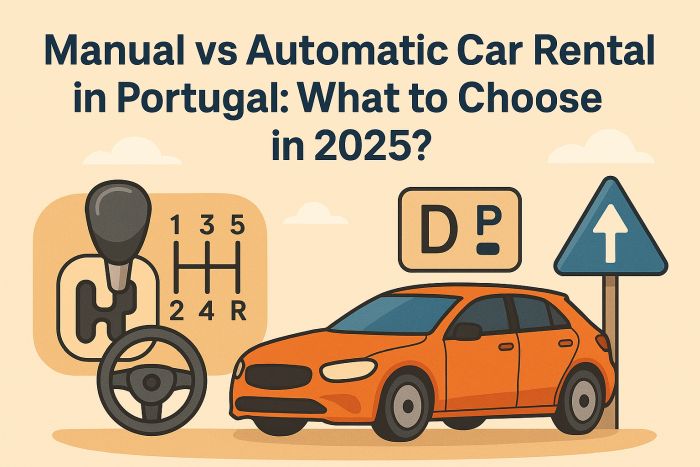
- Rental Fleet Makeup – Around 70–80% of rental cars are manual.
- Lower Prices – Manual cars are cheaper to rent and maintain, so savings are passed on to customers.
- More Choice – Compact city cars, SUVs, vans, and many budget-friendly models are manual.
💡 Tip: If you can drive manual, you’ll have far more choice and availability, especially for last-minute rentals.
💰 Cost Difference
On average:
- Manual economy car: from €25/day
- Automatic economy car: from €35–€40/day
- Automatic SUV or premium: €60–€90/day or more
In peak summer (July–August), an automatic can cost €200+ extra per week compared to a manual.
🏞 Driving Scenarios to Help You Decide
When Manual is Fine ✅
- You’re confident with clutch control.
- You want to save €10–€20 per day.
- You’ll drive mostly on open highways.
When Automatic is Better ⭐
- You’re not used to manual gear shifting.
- You’ll spend a lot of time in Lisbon or Porto traffic.
- You prefer a more relaxed drive in an unfamiliar country.
🏙 City Driving – Lisbon, Porto, Faro
Cities in Portugal can be challenging:
- Narrow streets in historic districts like Alfama and Ribeira.
- Steep hills that require precise clutch use.
- Rush hour congestion that can double travel times.
💡 Automatic cars make stop-and-go traffic easier, especially if you’re tired from sightseeing.
🛣 Highway & Long-Distance Trips
Portugal’s highways (autoestradas) are excellent:
💸 Don’t Overpay at the Airport
Compare real-time rental deals with no hidden fees or credit card needed.
- Speed limit: 120 km/h
- Electronic toll system (Via Verde) for quick payments
- Fewer gear changes needed, so manual driving is easy
💡 For long trips like Lisbon–Porto or Lisbon–Seville, both transmissions are comfortable, but automatics reduce fatigue on 500+ km days.
🏔 Rural & Mountain Roads
Regions like Serra da Estrela and Douro Valley have winding mountain roads:
- Manual cars offer better engine braking downhill.
- Automatics remove the stress of uphill starts.
💡 Some modern automatics have “manual mode” so you can downshift on steep descents.
📅 Seasonal Considerations
- Summer (Jun–Aug): Automatic demand is high — book at least 6–8 weeks ahead.
- Spring & Autumn: Balanced availability, prices slightly lower.
- Winter: If driving in mountain areas, check for snow chains (many automatics are front-wheel drive only).
🛡 Insurance & Rental Policies
Transmission choice won’t change your standard CDW or theft coverage, but:
- Automatics are often newer models and may have higher excess fees.
- Manual cars might have higher mileage but lower replacement costs.
🔋 Fuel Economy
- Older manuals were always more fuel-efficient, but modern automatics now match them.
- Hybrid and electric cars are always automatic.
- Diesel manual cars still dominate for larger vehicles and vans.
💡 Diesel is often €0.15–€0.25 cheaper per liter than petrol in Portugal.
⚡ Electric & Hybrid Rentals
EV rentals are on the rise, especially in Lisbon and Porto:
- Automatic by default
- Charging network expanding via Mobi.E
- Ideal for shorter trips with predictable routes
📌 Pros & Cons Summary
Manual Pros
✅ Cheaper daily rates
✅ More model choices
✅ Ideal for experienced drivers
Manual Cons
❌ Steeper learning curve for beginners
❌ More stressful in city traffic
❌ Hill starts in Lisbon/Porto can be tricky
Automatic Pros
✅ Easier in heavy traffic & hills
✅ Less fatigue on long drives
✅ Best for drivers unfamiliar with manual
Automatic Cons
❌ More expensive
❌ Limited availability in rural rental offices
🗝 Tips for Renting in Portugal – Any Transmission
- Book early in summer, especially for automatics
- Choose smaller cars for old city centers
- Ask for Via Verde for toll payments
- Inspect the clutch if renting manual — report any issues before leaving
- Photograph the car at pick-up and drop-off
🧭 Example Trip Choices
- Lisbon to Cascais & Sintra – Automatic easier for winding roads & parking.
- Lisbon to Évora & Alentejo – Manual fine; mostly open roads.
- Porto to Douro Valley – Manual for control; automatic for relaxed sightseeing.
- Lisbon to Algarve – Either works; highways dominate the route.
✅ Final Takeaways
Manual cars dominate in Portugal, offering lower prices and more availability. Automatics make city driving easier but cost more.
For the best experience:
- Choose manual if you’re confident and want to save money.
- Choose automatic if comfort matters more than cost.
- Always match your choice to your itinerary and driving style.
🔑 Summary
In 2026, most rental cars in Portugal are manual 🚙. Automatics cost more but make city driving easier. This guide explains prices, availability, and tips to choose the best option for your trip.